Board build
Caliper, density and total leaf build matched to size, page count and handling.

Thick leaves · rounded edges · repeat reading
For publishers and education programs that need a tactile book to open well, withstand repeat handling and remain consistent across a coordinated series.
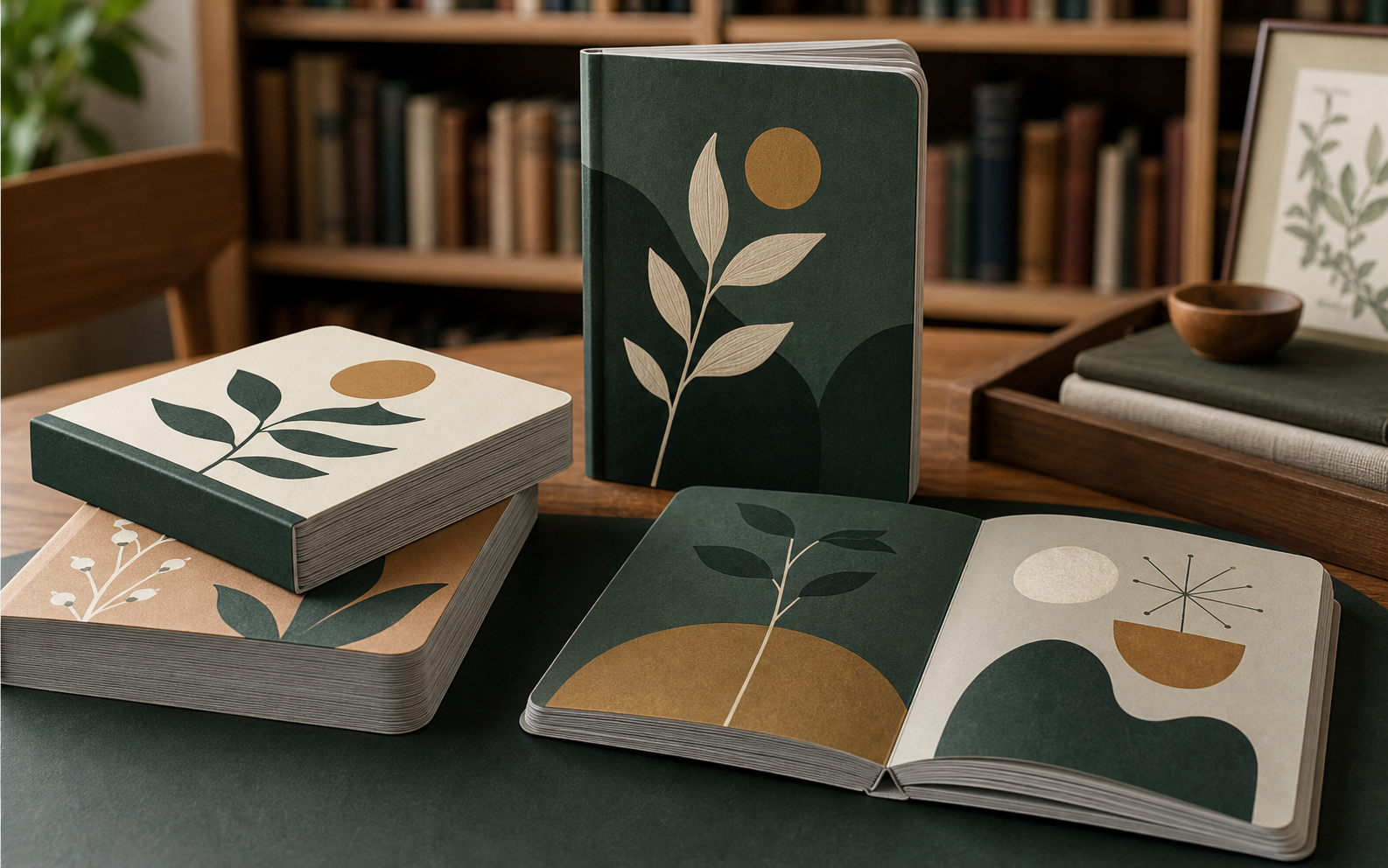
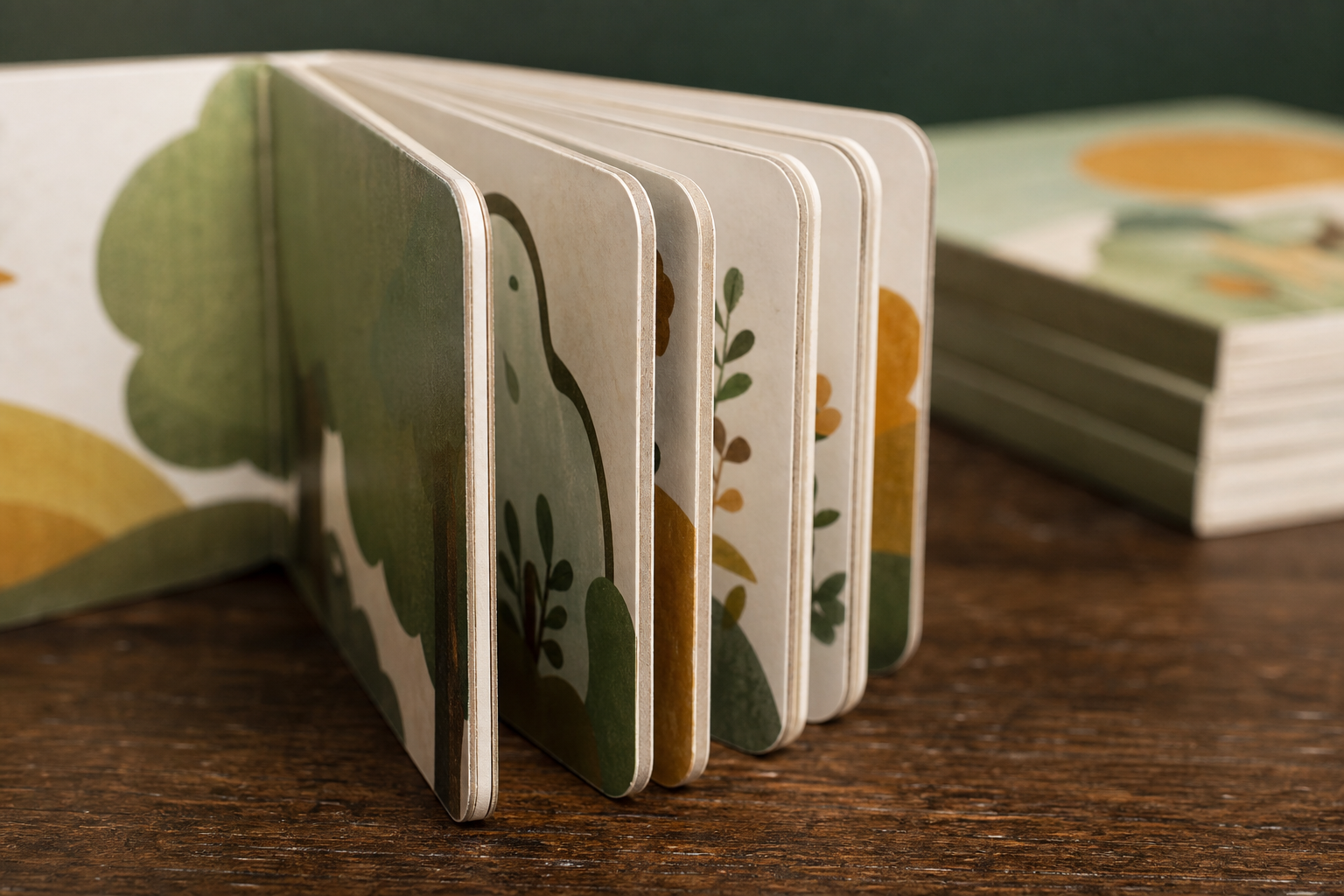
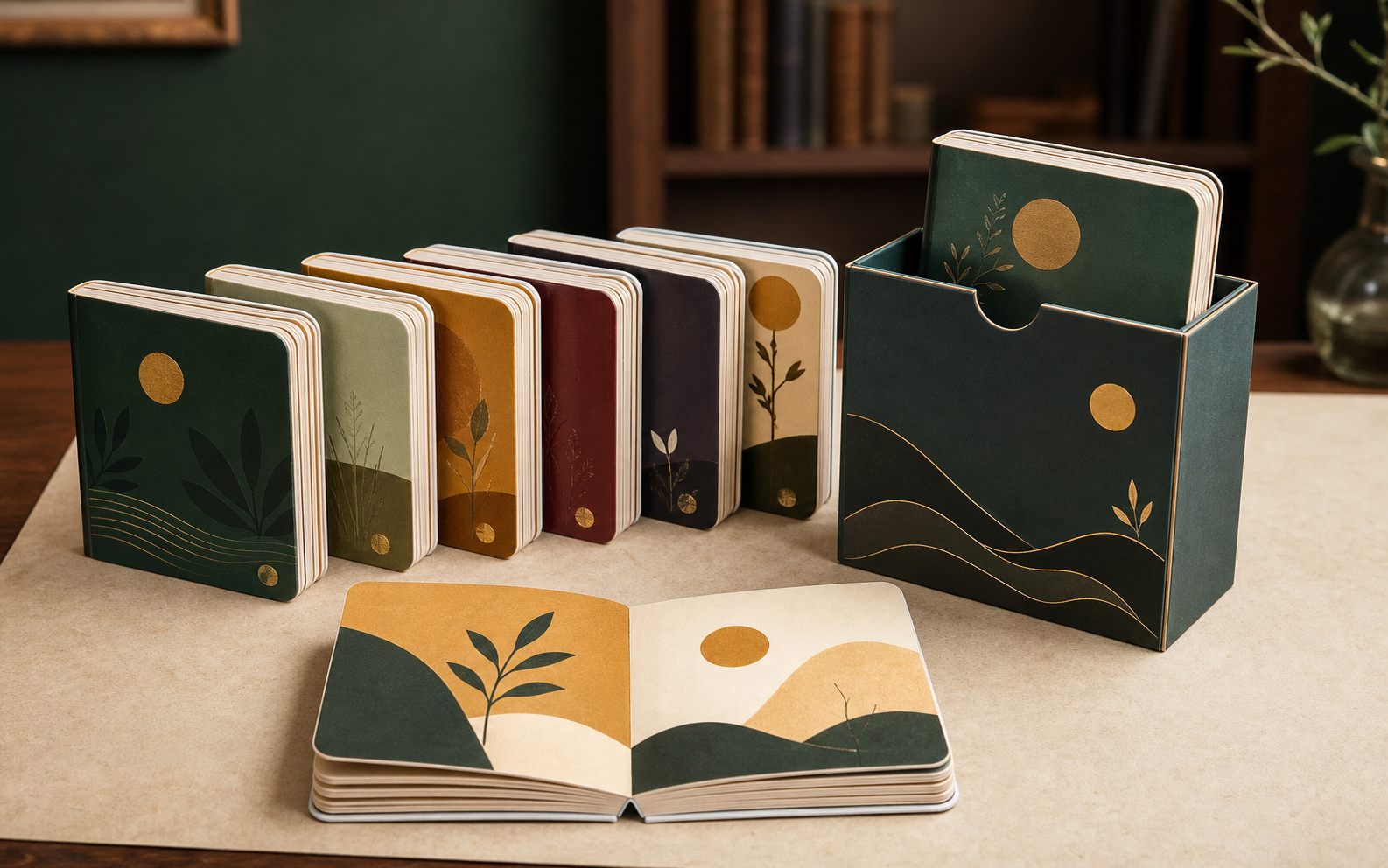
A small format with serious engineering
A board book is handled before it is read in the conventional sense. The reader turns, grips, points and returns to the same pages. That physical use makes page thickness, edge finish, opening behavior and surface protection part of the editorial experience.
We review the book as a complete system: artwork and safe zones, mounted leaf construction, hinge and gutter, corner profile, lamination, page sequence, series consistency and protective packing. Unusual shapes or interactive features are confirmed through a physical dummy before production.

Designed around real use
Board books work across early-learning series, illustrated stories, concept books, museum family programs and premium gift sets. The right structure feels substantial in the hand while preserving clear imagery, comfortable page turns and a calm reading rhythm.
Specification framework
These are planning references, not automatic promises. Final construction, quantity, timing and compliance documentation follow the approved artwork, dummy, sample and destination-market requirements.
Send your current specification →| Common formats | Portrait, landscape, square and custom shapes; final size reviewed against handling, packing and artwork |
|---|---|
| Leaf construction | Printed sheets mounted back-to-back on board; board caliper and build selected by format and required rigidity |
| Page planning | Common short-form and series formats; final pagination follows construction, content and approved dummy |
| Corners & shapes | Square, rounded or custom die-cut profiles subject to artwork, tooling and physical sample review |
| Surface protection | Matte or gloss lamination and approved protective finishes selected for color, touch and expected use |
| Opening system | Hinge, gutter and leaf geometry engineered for page turning and the intended opening behavior |
| Optional features | Windows, flaps, tactile elements, applied pieces and special shapes only after feasibility and dummy approval |
| Color & proofing | Digital proof, material dummy and production sample selected according to color, structure and project risk |
| Packing | Individual protection, set packing, slipcases, cartons and export packing planned around the finished book |
Structure & finishing
The strongest board book is not the heaviest one. It is the edition where board, paper, finish, hinge, edge and series standards work together.
Caliper, density and total leaf build matched to size, page count and handling.
Artwork, color and mounting reviewed to keep imagery aligned across every leaf.
Lamination or approved coating selected for touch, scuff resistance and color.
Rounded, square or custom profiles produced to an approved physical reference.
Opening geometry planned so illustration, text and page turns remain comfortable.
Recorded format, color and packing references support repeat titles and reprints.
A controlled production path
Size, pagination, quantity, use, destination, artwork and series requirements.
Board build, hinge, corners, surface and packing resolved as one structure.
A physical dummy and appropriate color proof confirm sequence, feel and opening.
Printing, mounting, die cutting and binding follow the approved references.
Sequence, edges, opening, surface and packing are checked before shipment.
Board book printing FAQ
Share the finished size, page count, quantity, board or thickness preference, corner shape, surface finish, artwork status, special features, packing requirement and delivery destination. A reference book or photos help when the structure is not yet documented.
Thickness is chosen with the trim size, page count, desired hand feel, opening behavior and total book weight in mind. We confirm the build through a material dummy rather than selecting it from appearance alone.
Yes. Rounded corners are common, while square and custom die-cut profiles are also possible. The exact radius or shape should be confirmed in the approved dummy and artwork.
Both are possible. The choice depends on the illustration style, color, touch, expected handling and scuff tolerance. A material proof helps compare the final appearance.
Potentially, subject to structural feasibility, tooling, assembly and destination-market review. A working dummy is required before unusual constructions are approved for production.
Yes. A coordinated series can use recorded size, board, color and packing standards. Slipcase fit and book tolerance should be proven with the finished construction, not artwork dimensions alone.
Requirements vary by product, materials, age grading and destination market. Tell us the market and requested standard at enquiry stage; any testing, report or declaration must be specifically verified and agreed for the project.
Start with the physical structure
Send the size, page count, quantity, market, artwork status and reference images. We will identify the missing structure, proofing and packing decisions before quotation.
Start a board book project