Production guide · Hardcover books

Hardcover anatomy & binding.

A working vocabulary for publishers, designers and production teams—from case materials and endsheets to sewing, spine geometry, opening behaviour and front matter.

3 systemsCase · connection · book block
15 termsProduction vocabulary
6 opening choicesEndpapers & front matter
8 binding routesStructure before decoration

Anatomy of a hardcover book

Name every part before specifying the finish.

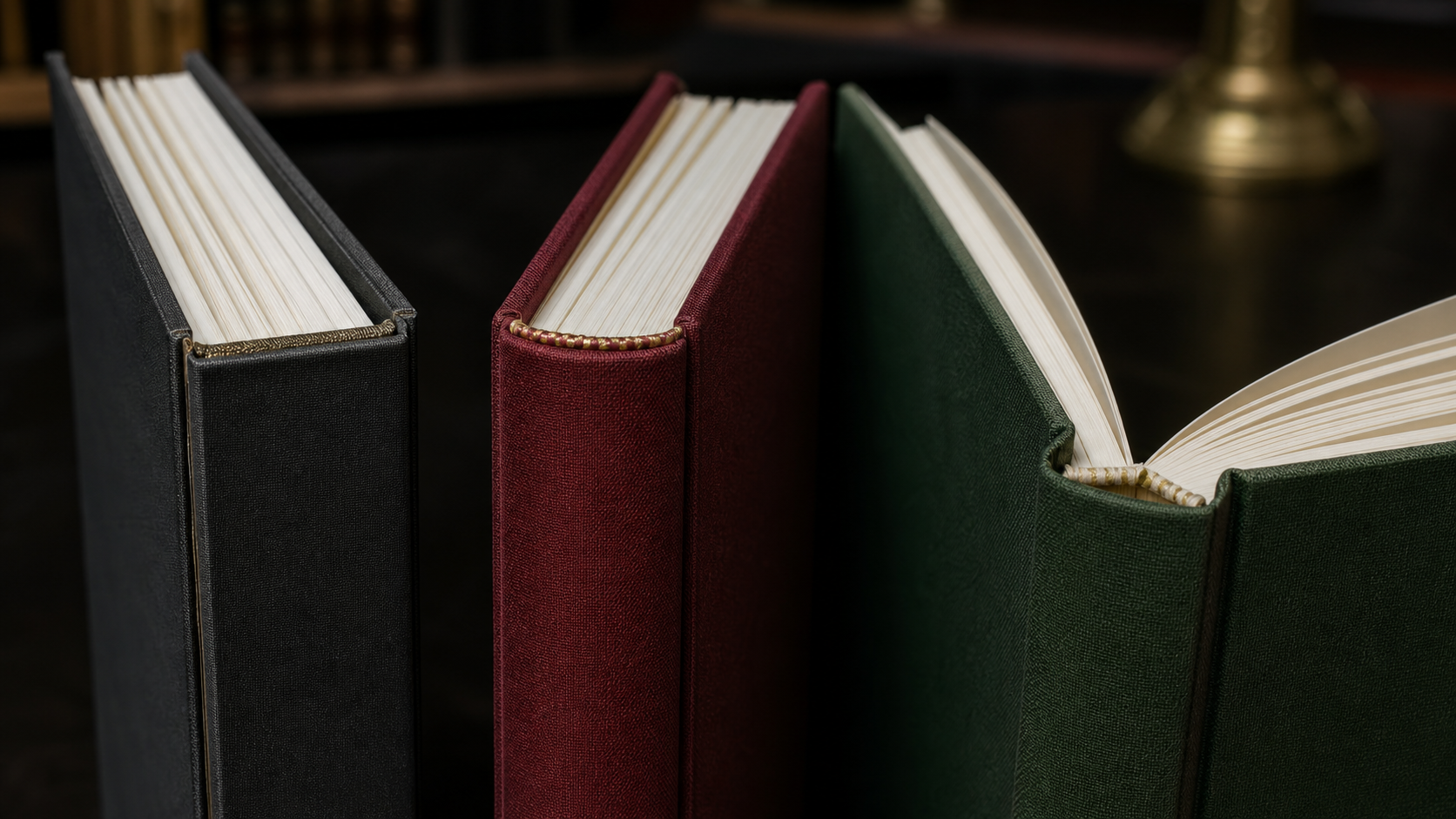
Professional specifications work when design and production use the same vocabulary. A hardcover is not simply a cover around printed pages: the case, connection, opening and book block must be engineered as one object.

System 01

The case

The outer structure that protects and presents the edition.

  1. Cover wrapPrinted paper, book cloth, leather-like or approved specialty material.
  2. Cover boardsGreyboard selected by format, weight and required rigidity.
  3. Spine boardThe shaped or flat component that defines the external spine.
  4. Joint / grooveThe controlled channel between spine and boards that allows the cover to open.
  5. Board squareThe board projection beyond the trimmed book block.
System 02

The connection

The paper and hinge system that joins the case to the book block.

  1. Endsheet / endpaperThe folded sheet at the front and back that connects book block and case.
  2. PastedownThe leaf of the endsheet adhered to the inside cover board.
  3. Free endpaperThe unpasted leaf that opens with the book block.
  4. HingeThe working fold where the pastedown and free endpaper move at the joint.
  5. FlyleafA blank leaf before or after the text; terminology varies, so name it in the specification.
System 03

The book block

The printed, folded, gathered and bound interior of the edition.

  1. Signatures / sectionsFolded page groups gathered in sequence.
  2. Section sewingThread joining the signatures before spine reinforcement.
  3. Spine liningMull, super, gauze or paper layers that stabilize the sewn spine.
  4. HeadbandA decorative or functional band at the head and tail of the spine.
  5. Ribbon markerAn optional bound-in ribbon specified by width, color and position.

Endpapers & opening leaves

The first turn of the cover is already part of the design.

Endpapers carry structural load and establish the visual transition into the publication. Material, grain direction, opacity, folding, printing and adhesive compatibility must be tested—not selected by color alone.

01

Plain text endpapers

Unprinted white, cream or colored woodfree paper for clean, reliable case attachment.

Production term: plain endsheet
02

Specialty-paper endpapers

Textured, dyed-through, metallic or tactile stocks chosen for fold strength and adhesive compatibility.

Production term: specialty endsheet
03

Printed endpapers

Solid color, pattern, map, illustration or publisher system printed before folding and casing-in.

Production term: printed endsheet
04

Translucent opening leaf

Vellum-style or translucent paper used as an optional tipped-in or bound-in reveal, subject to cracking, curl and show-through tests.

Production term: translucent interleaf / vellum leaf
05

Flyleaf & half-title

The flyleaf is generally blank; the half-title carries only the short title and belongs to the front matter, not the pastedown.

Editorial terms: flyleaf / half-title
06

Frontispiece & title page

A frontispiece may face the full title page; both are part of the text block and should be planned in pagination.

Editorial terms: frontispiece / title page

Typical opening sequence

  1. 01Front cover
  2. 02Pastedown
  3. 03Free endpaper
  4. 04Optional translucent leaf
  5. 05Half-title
  6. 06Frontispiece
  7. 07Title page
  8. 08Copyright / imprint

This sequence is a planning model, not a fixed rule. The publisher's editorial pagination and approved dummy remain authoritative.

Hardcover binding architecture

The difference is built into the spine.

Binding is selected from format, paper, page count, opening behaviour, expected life and distribution—not from appearance alone. Every non-standard construction is confirmed through a material dummy or production sample.

Editorial construction study of section-sewn hardcover binding
01 · Book blockSection sewing & reinforcement

Folded signatures, sewing pattern, spine reinforcement and endpaper attachment are coordinated for strength and opening.

Editorial study of square-back rounded-spine and opening behaviour
02 · Spine geometrySquare, rounded & opening-led structures

Spine profile and joint geometry are chosen around thickness, paper grain and intended reading behaviour.

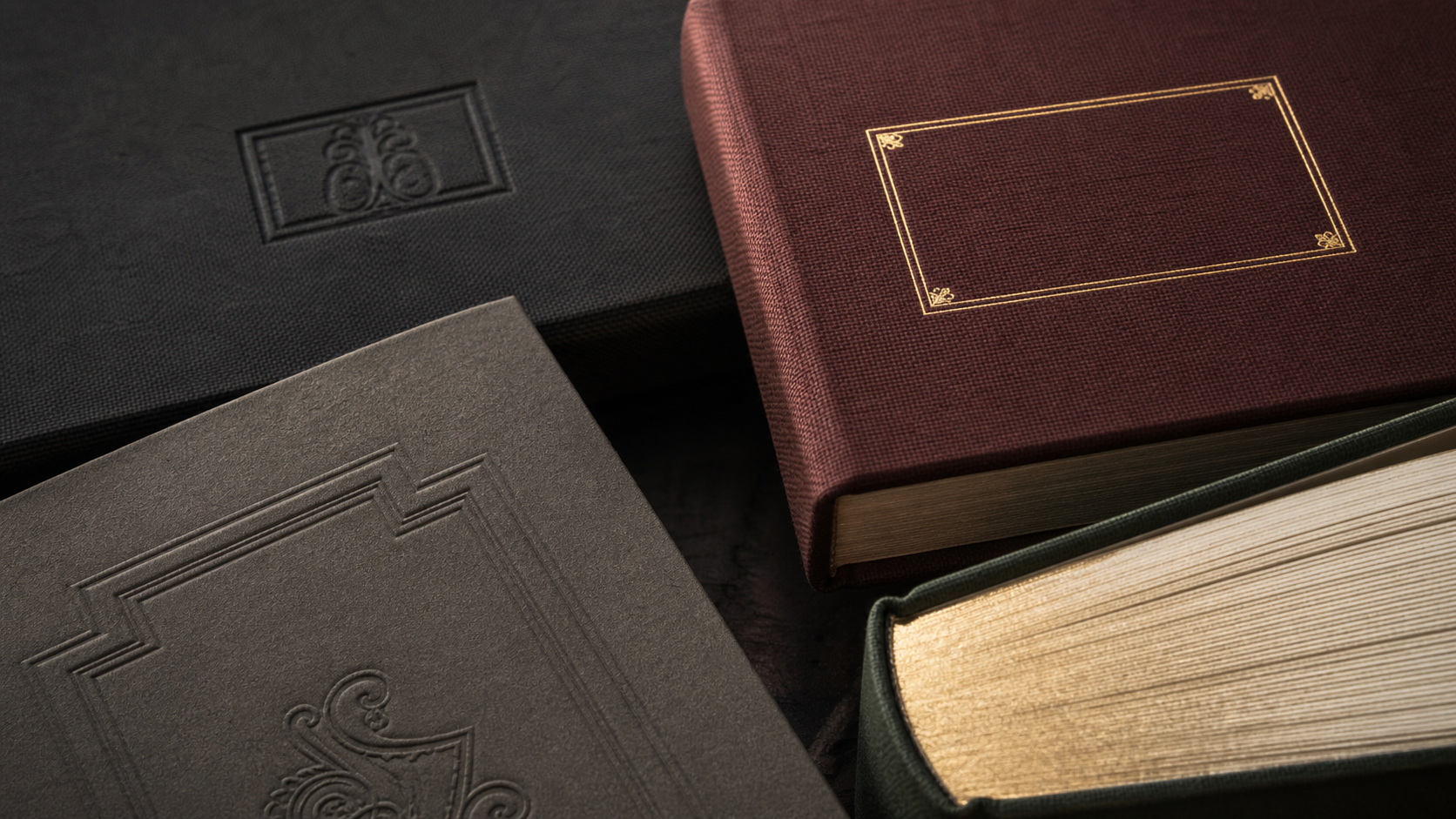
Editorial study of premium hardcover cloth foil embossing and edge finishing
03 · Surface systemCloth, relief, foil & edge detail

Finishing is tested as a controlled material system, with registration, pressure and durability reviewed together.

01

Smyth-sewn case binding

Signature sewing for durable editions and controlled opening.

02

Sewn-and-PUR case binding

Sewing reinforced with flexible PUR where the specification justifies it.

03

Square-back case

A clean profile with controlled joint, hinge and board square.

04

Rounded & backed spine

A shaped spine with shoulders for suitable substantial editions.

05

Lay-flat engineered opening

Grain, section plan, sewing and hinge developed around spread visibility.

06

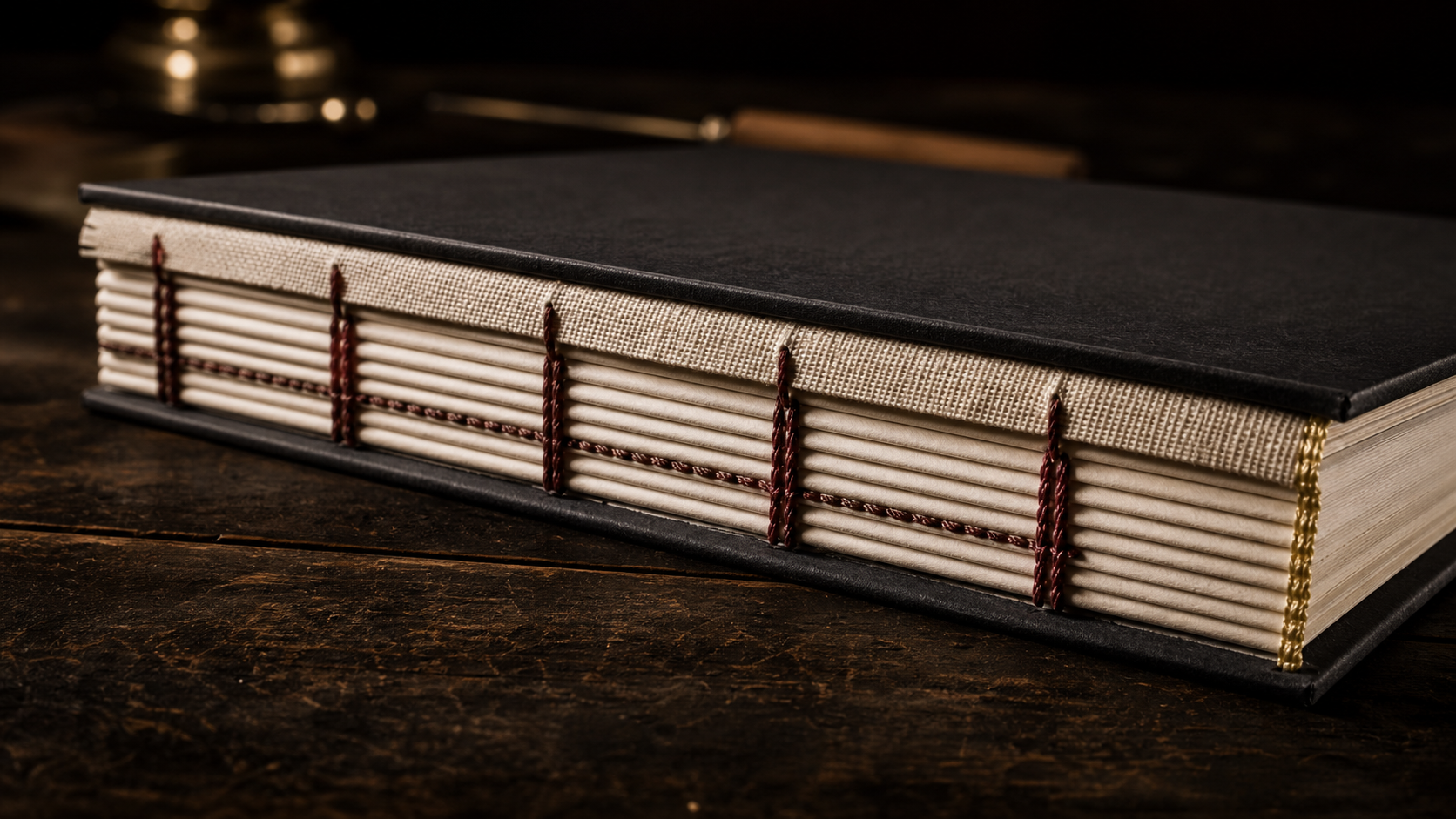
Exposed & special sewing

Visible thread concepts resolved together with protection and handling.

07

Case-making precision

Board, turn-ins, corners, joint width and squareness checked before casing-in.

08

Headbands, ribbons & edges

Small elements specified by material, placement and tolerance.

Production rule

These images are editorial construction studies, not a claim that every method suits every title. Final construction follows artwork, physical specifications, quantity and an approved sample.

Discuss the binding structure →

Binding terminology FAQ

Terms that should not be merged in a specification.

Are endpaper and flyleaf the same thing?

Usage varies, but a production specification should distinguish the folded endsheet, its pastedown leaf, its free leaf and any additional blank flyleaf.

Is translucent paper always an endpaper?

No. It may be used as a tipped-in or bound-in interleaf, tissue guard or reveal page. Its exact position and attachment must be specified.

What is the difference between a half-title and title page?

A half-title normally carries only the short title. The full title page carries the complete title and publication information and is part of the text block.

When should a hardcover be section sewn?

Section sewing is often selected for durability and opening behaviour, but format, stock, page count, use and budget must be reviewed together.

Can any book use a rounded and backed spine?

No. Book-block thickness, paper, section plan and intended appearance determine whether rounding and backing is appropriate.

Why is a physical dummy important?

It reveals thickness, opening, hinge movement, board square, endpaper behaviour and fit before production materials and finishing are committed.

Apply the knowledge

Specify the structure before the decoration.

Send the format, page count, paper, quantity, intended use and reference edition. Gold Printing can identify which construction decisions require a dummy or sample.

Start a binding review